📑 Table of Contents
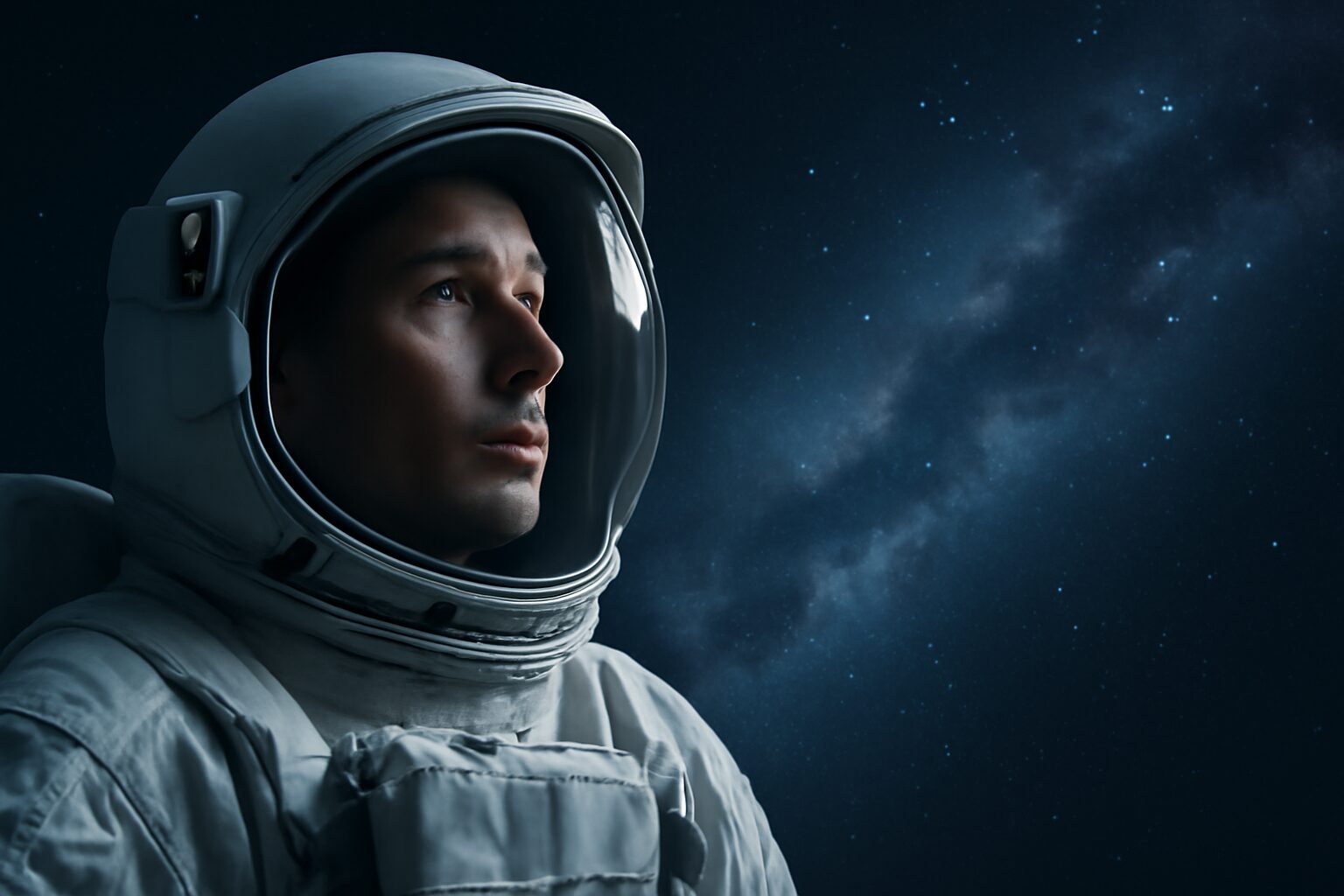
Imagine a universe so vast that even with our most powerful telescopes, we’ve only scratched its surface. Picture a place where stars are born, black holes swallow entire galaxies, and planets orbit in patterns so complex they boggle the mind. Space isn’t just the final frontier for science fiction; it’s a living laboratory full of mysteries waiting to be uncovered. Today, we’re diving into some of the most fascinating aspects of space that will not only blow your mind but also inspire your curiosity to look up and wonder—what else is out there?
The Scale of the Universe: Mind-Boggling Numbers
First off, understanding space requires a grasp of its staggering scale. It’s not just big; it’s astronomically enormous. For instance, our home galaxy, the Milky Way, is approximately 100,000 light-years across. To put that into perspective, one light-year is about 5.88 trillion miles (9.46 trillion kilometers). So, light from the other side of the Milky Way takes 100,000 years to reach us. That’s like traveling at the speed of light and still taking a century to cross just one galaxy!
And speaking of galaxies, there are estimated to be over 2 trillion galaxies in the observable universe. Each galaxy contains billions or even trillions of stars—our sun is just one small star among hundreds of billions in the Milky Way alone. The sheer number of celestial objects is mind-blowing, but recent discoveries suggest the universe might be even bigger than we think, possibly infinite.
Brightest and Biggest: The Largest Structures
- Galaxy Clusters: Clusters like the Virgo Cluster contain thousands of galaxies bound together by gravity, stretching over tens of millions of light-years.
- Superclusters: Our local supercluster, the Laniakea Supercluster, spans over 500 million light-years and includes the Virgo Cluster, the Hydra-Centaurus Supercluster, and more.
- The Great Wall: The Hercules-Corona Borealis Great Wall is the largest known structure in the universe, a filament of galaxies stretching over 10 billion light-years.
Unraveling Cosmic Mysteries: The Black Holes and Dark Matter
Space is full of phenomena that challenge our understanding of physics. Black holes are perhaps the most intriguing. These cosmic monsters form when massive stars exhaust their fuel and collapse under their own gravity, creating singularities with gravitational pulls so strong that nothing, not even light, can escape.
There’s a supermassive black hole lurking at the center of our galaxy—the Sagittarius A*—which has a mass about four million times that of our sun. Interestingly, black holes aren’t just destructive entities; they are also key to understanding galaxy formation and evolution. Studying them helps scientists piece together the history of our universe.
Then there’s dark matter, an elusive substance accounting for about 27% of the universe’s mass-energy content. Unlike ordinary matter, dark matter doesn’t emit, absorb, or reflect light, making it invisible. Its presence is inferred from gravitational effects on visible matter, like the rotation curves of galaxies. Without dark matter, galaxies would fly apart, so it’s essential for cosmic structure formation.
Dark Energy: The Accelerating Universe
In addition to dark matter, scientists have discovered the universe’s expansion is speeding up, driven by an even more mysterious force called dark energy. Approximately 68% of the universe is made up of dark energy, pushing galaxies apart at an accelerating rate. This phenomenon was first observed in 1998 through supernova studies and has since revolutionized our understanding of cosmology.
The Search for Extraterrestrial Life: Are We Alone?
One of the most compelling questions in space exploration is whether extraterrestrial life exists. With billions of habitable planets potentially orbiting distant stars, the probability seems high, but definitive evidence remains elusive.
Astrobiology and the Habitable Zone
Astrobiologists study conditions that could support life, focusing on the “habitable zone”—the region around a star where liquid water can exist. Earth is in the Sun’s habitable zone, which makes it a prime candidate for life. Recent missions have found signs of water on Mars and moons like Europa and Enceladus, raising hopes they may harbor microbial life.
Recent Breakthroughs and Missions
- Kepler Mission: Discovered over 2,600 confirmed exoplanets, showing that planets are common in our galaxy.
- TESS (Transiting Exoplanet Survey Satellite): Continues to find Earth-like planets orbiting nearby stars.
- James Webb Space Telescope (JWST): Set to revolutionize our understanding of the universe by analyzing atmospheres of exoplanets and looking for biosignatures.
Human Presence in Space: From Moon to Mars
Humans have only just begun to explore space with real intent. The Apollo missions in the 1960s and 70s marked humanity’s first steps on the Moon. Now, with private companies like SpaceX and national agencies like NASA, plans are underway for sustained missions to Mars and beyond.
Current Missions and Future Goals
- Artemis Program: NASA’s plan to return humans to the Moon by the mid-2020s and establish a sustainable presence.
- Mars Missions: SpaceX’s Starship aims to send humans to Mars by the late 2020s, with the goal of establishing a self-sustaining colony.
- International Collaboration: The International Space Station (ISS) remains a hub for scientific research in microgravity and international cooperation.
How You Can Be Part of the Future
- Stay informed about space missions through NASA, ESA, and private spaceflight companies.
- Consider careers or education in STEM fields—space needs engineers, scientists, and visionaries.
- Support science outreach programs or participate in citizen science projects like SETI@home or galaxy surveys.
Key Takeaways
- The universe’s scale is almost incomprehensible, with billions of galaxies, stars, and planets yet to be studied.
- Phenomena like black holes, dark matter, and dark energy challenge and expand our understanding of physics.
- Humanity is on the cusp of interplanetary exploration, with exciting missions planned for the Moon, Mars, and beyond.
So, next time you gaze up at the night sky, remember: we live in a universe full of secrets and wonders that are just beginning to be uncovered. The more we learn, the more incredible our cosmic story becomes. Space isn’t just a distant place; it’s the ultimate adventure—one that’s happening right now, and you’re part of it.
This article was written with the assistance of AI. While we strive for accuracy, information may contain errors. Please verify important details from official sources.