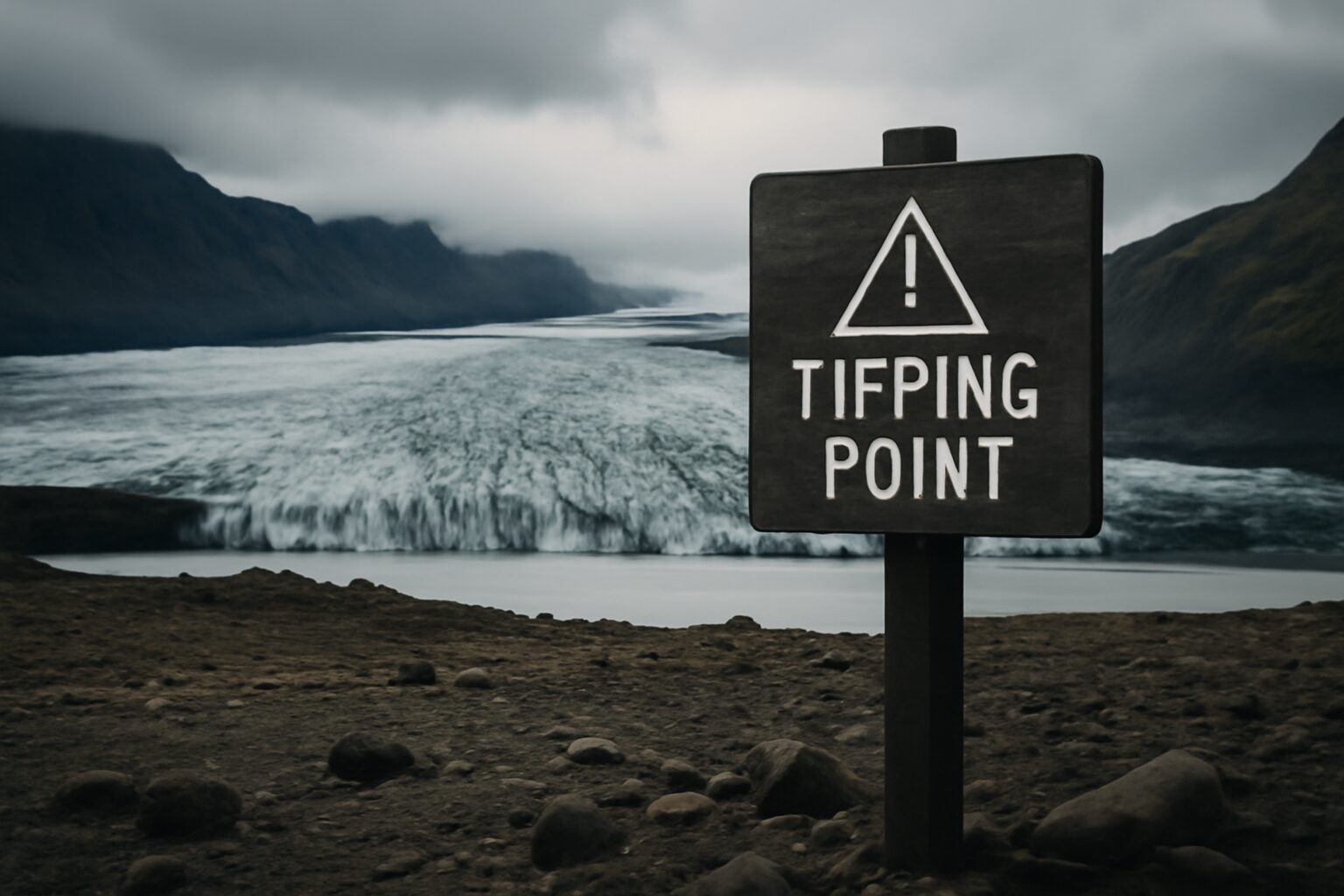
Imagine a world where the familiar patterns of climate, weather, and ecosystems are permanently altered — where the signs of change are no longer subtle but undeniable. Sounds like a dystopia? Unfortunately, it’s becoming increasingly evident that we’re already living in that reality. By 2026, scientific evidence shows that we’ve crossed several critical tipping points in our climate system — thresholds beyond which feedback loops could accelerate global warming and make some changes irreversible. If you’ve been wondering whether the worst-case scenarios are upon us, the answer is yes. But understanding these tipping points is crucial—not just to grasp the gravity of the situation, but to take urgent action today.
Understanding Climate Tipping Points: What Are They?
Before diving into what’s already happened, it’s essential to clarify what climate tipping points are. Think of them as the planetary equivalent of a snowball rolling downhill — once it reaches a certain size or momentum, it’s hard to stop. In climate science, tipping points refer to thresholds in natural systems where a small change can trigger a significant and sometimes irreversible shift. These include melting ice sheets, deforestation, permafrost thawing, and changes in ocean currents.
When these systems cross their tipping points, they can trigger feedback mechanisms that amplify global warming, making it harder to curb temperatures and restore previous conditions. The danger? Once crossed, reversing the damage becomes exponentially more difficult, often requiring centuries of effort or even becoming impossible without technological breakthroughs.
Now, what predictions and data tell us that some of these critical thresholds have already been crossed as of 2026? Let’s explore the evidence and implications.
Crossed Tipping Points in 2026: The Evidence
The Accelerated Melting of the Greenland and Antarctic Ice Sheets
One of the most alarming indicators is the rapid melting of polar ice. Data from satellite observations over the past decade reveal that Greenland’s ice loss has doubled since 2010, and in 2025 alone, Greenland lost approximately 600 gigatons of ice. Meanwhile, Antarctica has shed an estimated 150 gigatons of ice annually, with some regions experiencing ice shelf disintegration at rates previously deemed impossible.
What does crossing the tipping point mean here? It suggests that the Greenland and West Antarctic Ice Sheets are on the verge of irreversible disintegration. Once these massive ice reservoirs collapse, sea levels could rise by 6 to 10 feet globally, inundating coastal cities worldwide. Evidence from 2026 shows that the thresholds for stability are now breached in key sectors of these ice sheets, making their complete melting from current warming levels plausible within the next century if not mitigated.
Permafrost Thawing and Methane Release
Permafrost—permanently frozen ground—contains around 1,700 gigatons of organic carbon. As temperatures rise, permafrost thaws, releasing methane: a greenhouse gas with a warming potential over 80 times that of carbon dioxide over 20 years. Recent measurements indicate that permafrost regions in Siberia, Alaska, and northern Canada are thawing at rates 2-3 times faster than projections from just five years ago.
In 2026, scientists warn that the threshold for widespread permafrost thawing—once thought to occur at 1.5°C of global warming—has already been crossed in key regions. The release of methane from these regions could add an estimated 0.3°C to global temperature rise, creating a dangerous feedback loop that accelerates warming beyond the levels predicted just a decade ago.
Disruption of the Atlantic Meridional Overturning Circulation (AMOC)
The AMOC, which includes the Gulf Stream, plays a vital role in regulating climate by redistributing heat across the Atlantic Ocean. Climate models suggested that a significant weakening might occur if global temperatures rise beyond 1.5°C to 2°C. However, recent data from 2025 indicates that the AMOC has weakened by about 15%, the most significant decline in over a millennium.
If this weakening continues, it could trigger abrupt climate shifts, including colder winters in Europe, disrupted monsoon patterns in Africa and Asia, and more frequent hurricanes in the Atlantic. The threshold signaling a complete collapse—once considered decades away—is now perilously close, with some scientists arguing it has already been crossed.
Coral Reef Die-offs and Ocean Acidification
Coral reefs are often called the “canary in the coal mine” of climate change. Elevated sea temperatures and acidification have caused widespread bleaching and die-offs of coral systems. The Great Barrier Reef, for example, experienced three mass bleaching events in five years, with 2025 seeing over 80% of its coral population affected.
Scientists warn that once ocean acidity surpasses certain levels (pH reduction of about 0.3 units from pre-industrial levels), coral calcification becomes impossible, leading to collapse of reef ecosystems. Evidence points to the fact that ocean acidification has already crossed this critical threshold in many regions, endangering biodiversity and fisheries dependent on these ecosystems.
The Broader Impacts: How These Crossed Tipping Points Affect Us
Crossing these thresholds isn’t just about melting ice or changing weather patterns — it’s about the stability of our entire planet’s climate system. The consequences ripple across economies, health, food security, and geopolitical stability.
Sea Level Rise: Coastal cities like Miami, Mumbai, and Rotterdam are already grappling with encroaching tides. By 2026, some low-lying regions face increased flooding, displacing millions over the next few decades.
Extreme Weather Events: More intense hurricanes, droughts, and heatwaves threaten agriculture and water supplies. For example, the 2023 European drought caused billions in crop losses, and the trend is worsening.
Loss of Biodiversity: Coral reefs, Arctic species, and rainforest ecosystems are on the brink of collapse, leading to cascading effects on food webs and human livelihoods dependent on these ecosystems.
Economic Strain and Migration: Rising disasters and loss of livelihoods drive climate refugees, destabilizing regions and straining international resources.
Understanding these impacts underscores the urgency. Some changes are now inevitable; the question is whether we can slow, halt, or adapt to the cascading effects of crossing these critical thresholds.
What Can We Do Now? Actionable Steps to Limit Further Damage
While the science paints a sobering picture, it’s not too late to act. Every fraction of a degree, every policy change, and every individual effort counts. Here are practical steps to contribute:
Reduce Carbon Footprints: Switch to renewable energy sources, minimize car travel, and advocate for clean energy policies. Aim for at least a 50% reduction in your personal emissions by 2030.
Support Climate Policies: Vote for leaders committed to climate action, endorse carbon pricing, and support international agreements like the Paris Accord.
Protect Natural Ecosystems: Participate in or donate to reforestation projects and conservation efforts that help preserve forests, wetlands, and permafrost.
Educate and Advocate: Spread awareness about climate tipping points and mobilize communities to push for systemic change.
Innovate and Invest: Support technological innovations that remove carbon from the atmosphere, such as direct air capture and carbon-negative farming.
Every action, big or small, contributes to delaying or preventing the crossing of additional thresholds. The time to act is now — because the longer we wait, the more irreversible the damage becomes.
Key Takeaways
By 2026, we have already crossed several critical climate tipping points, including major ice sheet disintegration, permafrost thawing, and weakening of ocean circulation systems.
These thresholds contribute to accelerating global warming, rising sea levels, and extreme weather events that threaten ecosystems and human societies worldwide.
Urgent, collective action—through policy, lifestyle changes, and technological innovation—is essential to slow, halt, or reverse some of these irreversible changes.
As unsettling as these facts are, they serve as a wake-up call. The future of our planet depends on the choices we make today. It’s not just about avoiding catastrophe — it’s about securing a sustainable, resilient world for generations to come.
This article was written with the assistance of AI. While we strive for accuracy, information may contain errors. Please verify important details from official sources.